
Welcome to #6 of the Deep Tech From Scratch podcast!
In this episode, Dom Falcão speaks with Eric Burns, CEO of Thunderstone, about how the company is rethinking mining from first principles, using high-voltage electricity to unlock critical metals faster, cheaper and with dramatically less waste.
THE MATERIALS PROBLEM
As Eric puts it, “we cannot recycle our way out of this crisis.” The metal atoms needed to build the infrastructure of the energy transition, copper for grids, nickel and cobalt for batteries, simply do not yet exist in sufficient quantities within the system. The IEA projected a fourfold increase in demand for critical minerals by 2040, and growing geopolitical pressure on supply chains is only accelerating that challenge.
The inefficiency at the core of conventional mining is structural. At ore grades of around 1% metal content, the industry’s approach is to move the entire rock mass: blast it, crush it, process it with acid, and recover a tiny fraction of usable material. That process accounts for roughly 90% of the energy use and cost at a mine site. Thunderstone started with a more fundamental question: what if you didn’t have to move the rock at all?
FROM PLANTS TO LIGHTNING

Thunderstone’s core technology was inspired by biology before realising the same mechanism through physics. Plant root systems solve a version of the same problem mining faces today: how to move reactive fluids toward dispersed atoms efficiently, through targeted pathways rather than processing entire volumes of material in bulk.
Eric's question was whether that same architecture could be recreated artificially and at industrial scale and the answer came from lightning. At high enough voltages, something shifts. Instead of dispersing across three dimensions, energy finds a single path - the same way a bolt of lightning doesn't flood the sky but traces one channel to the ground. If you could do that underground, deliberately, you wouldn't need to move the rock at all. You'd move through it.
In Thunderstone's lab, that means pulses of up to 400,000 volts delivered over hundreds of nanoseconds. The pulse moves faster than the material can react. Electrons are stripped before the rock has registered what's happening, leaving behind a channel that closes again once the voltage stops, proof that the effect is active and controllable, not a one-off structural change.
WHY LATERITES MATTER
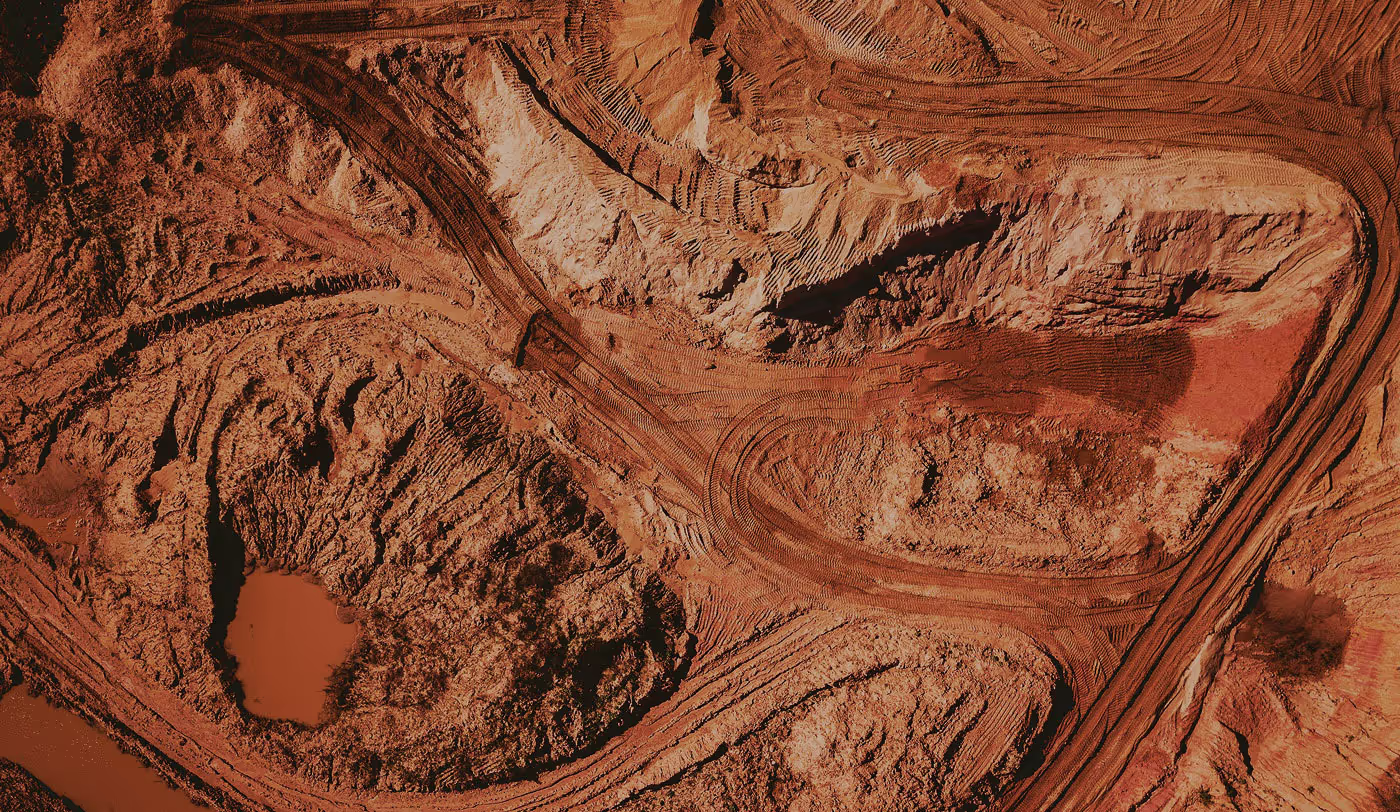
The commercial case becomes clear when you look at where the world’s nickel sits. Around 70% of global nickel resources are found in laterite deposits, a material class somewhere between rock and clay that resists both conventional grinding and fracking techniques.
In early demonstration work, Thunderstone achieved a 10x increase in flow rate through laterites. That creates two major opportunities. In brownfield operations, the technology can be retrofitted into existing heap leach sites, redirecting fluid into clogged zones and recovering metals that would otherwise be left behind.
In greenfield settings, it points toward an entirely different model of mining, one where the rock stays in the ground and the extraction process works around it rather than against it.
The potential impact is significant: dramatically lower waste, up to a 95% reduction in environmental footprint and extraction rates that could be multiple times faster than conventional approaches.
BUILDING THE TEAM

Eric is deliberate about who joins the team. His three criteria are simple: openness, critical thinking and a genuine commitment to the problem being solved.
The result is a deeply interdisciplinary group: a high-voltage specialist from the plasma fusion world, and a mechanical engineer with experience across Lyft, Uber and autonomous trucking.
The culture is built around the idea that if you bring together people who genuinely want to think collaboratively, you spend far less time managing and far more time building. That matters because Thunderstone is not trying to incrementally improve mining. It is working towards rethinking the system entirely.
You can listen to the full episode here and learn more about Thunderstone on their LinkedIn.
And your Easter Egg - for making it to the final line of the finale of our podcast series, is a video of Eric playing violin at ARPA-E